Case study
InsureFlow AI
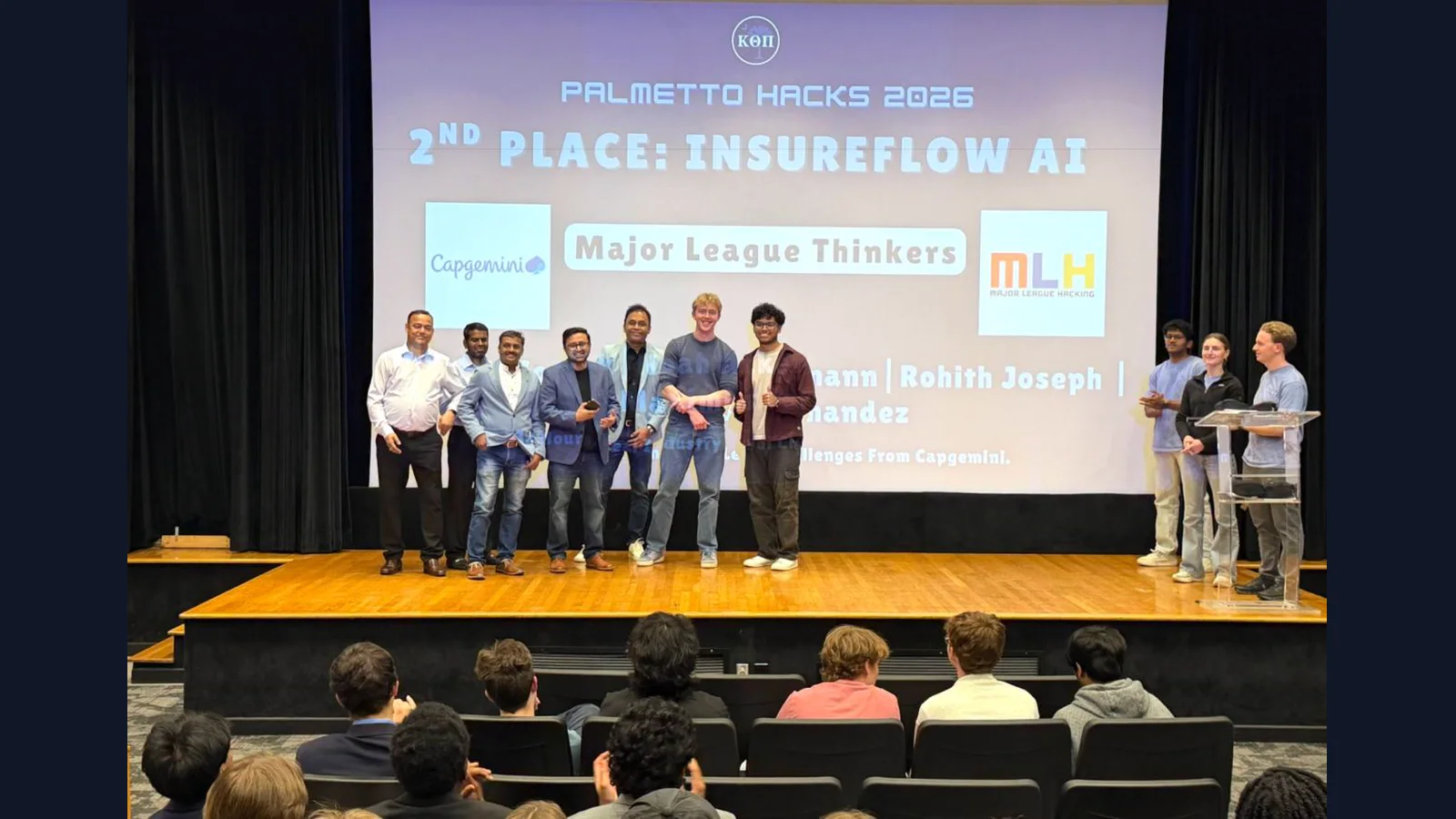
Second place in Capgemini's InsureFlow challenge.
- Role:
- Backend and AI integration developer
- Timeline:
- Apr 11, 2026, 12 hours
- Stack:
- Python, FastAPI, Next.js, PostgreSQL, OpenAI, Azure AI Vision
The problem
Claims and underwriting teams work across damage photos, broker documents, customer descriptions, and policy data before they can decide what happens next.
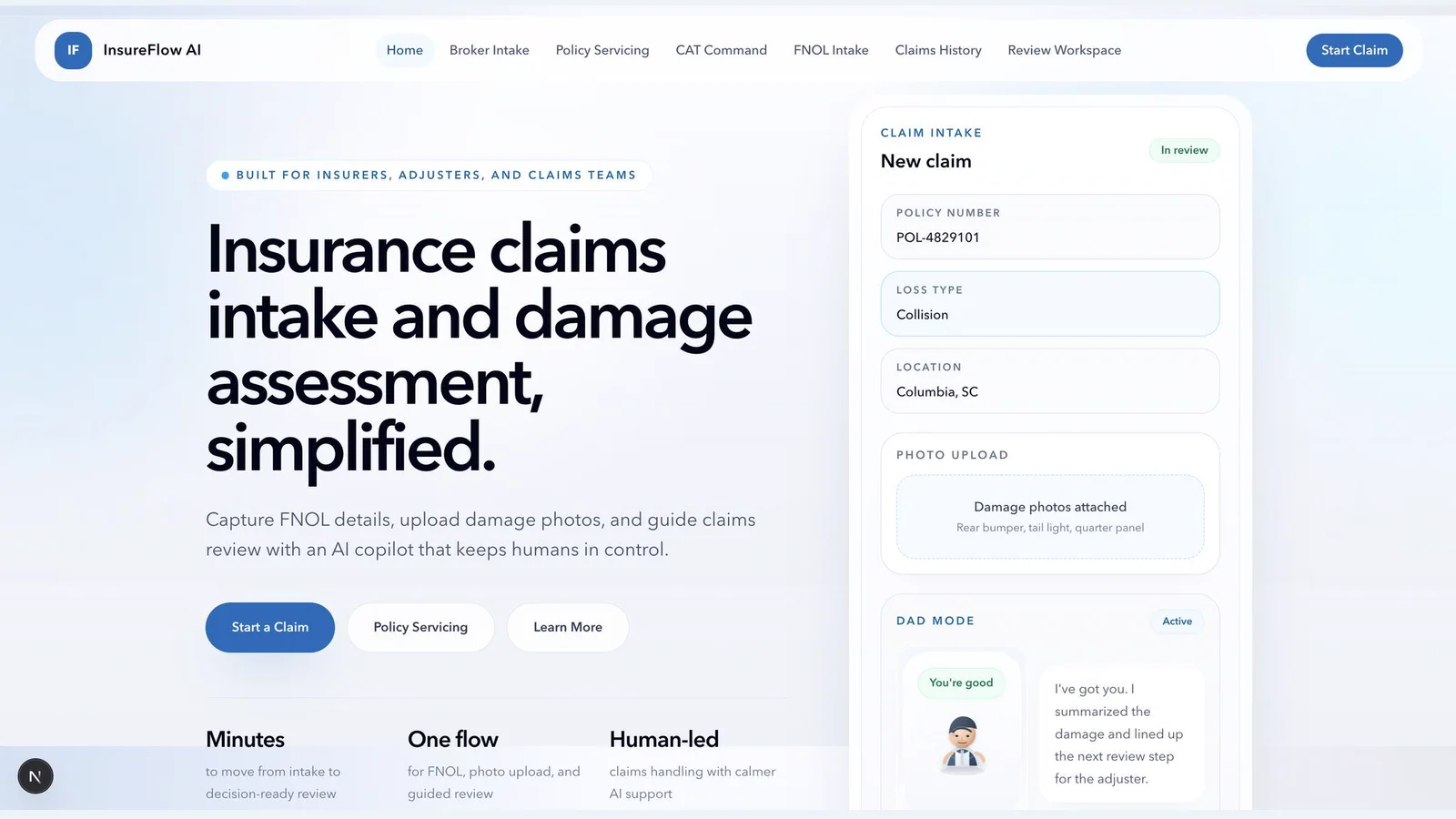
Our four-person team put broker intake, multilingual policy service, first notice of loss, human review, and ZIP-level catastrophe tracking in one prototype.
Constraints and tradeoffs
Constraint
Model output could not move directly into an insurance workflow without review.
Decision
Structured prompts and confidence scores produced recommendations, while approve, override, and escalate controls kept the final action with a person.
How it works
Next.js workflows call FastAPI services that coordinate document extraction, Azure AI Vision classification, model responses, and PostgreSQL persistence before returning structured results for review.
Product screens
Results and takeaways
- 2nd
- Placement
- 4
- Team size
- 12 hours
- Build time